CAL-Pathfinder
CAL-Pathfinder
Cal Axion LC (CAL-Pathfinder) is a lumped-element detector searching for axions in the 0.45 - 0.55 μeV mass range, corresponding to frequencies around 100 MHz. CAL-Pathfinder will not only be sensitive to an unexplored range of axion masses, but will also serve as a testbed for experimental techniques required for future, more sensitive lumped-element detectors. The experiment will demonstrate the feasability of the solenoid magnet geometry and be a platform for testing SQUID amplifiers designed to operated at these frequencies.
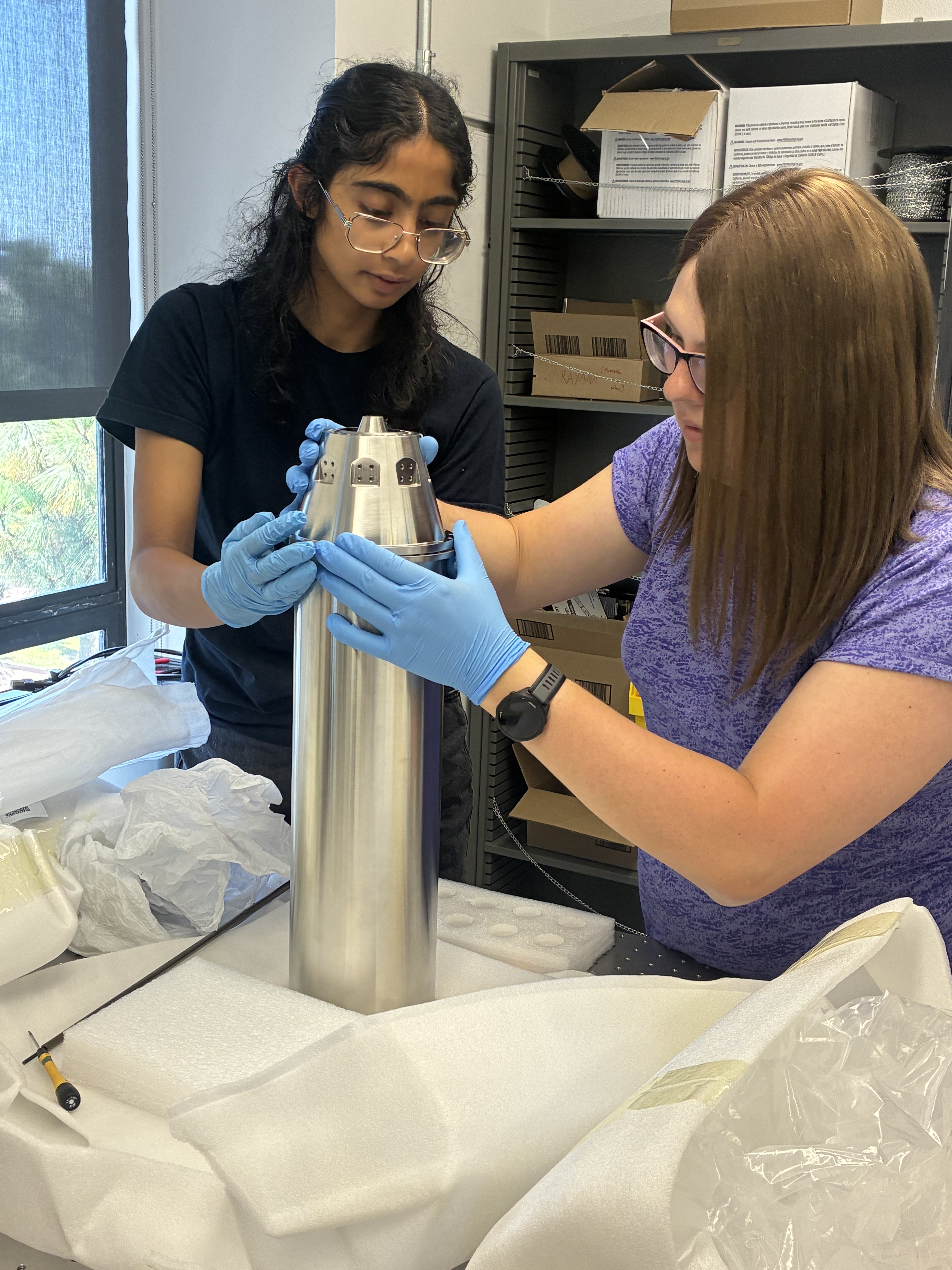
Detection Principle
CAL-Pathfinder relies on the lumped-element technique for axion detection. A 9 T solenoidal superconducting magnet is attached to a Bluefors LD400 dilution refrigerator. An inductive, coaxial pickup hangs off the mixing chamber of the dilution fridge and resides within the bore of the magnet. Attached to the pickup is a tunable capacitor. Axion interactions with the magnetic field induce a current on the surface of the pickup. These induced currents travel through the LC circuit formed by the pickup and capacitor and are read out by a DC SQUID amplifier chain. The pickup, capacitor, and SQUID amplifiers all operate at temperatures near 20 mK.
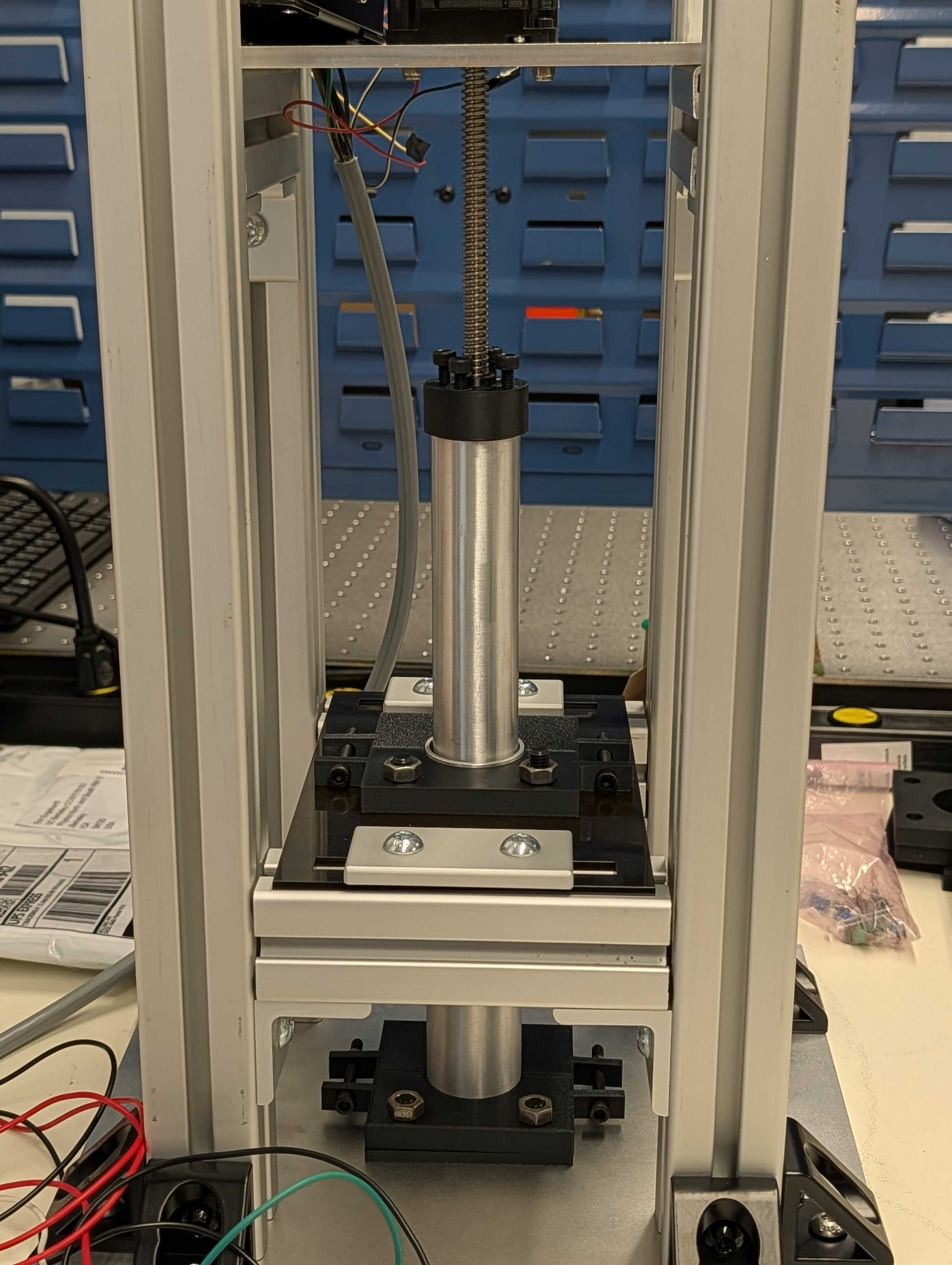
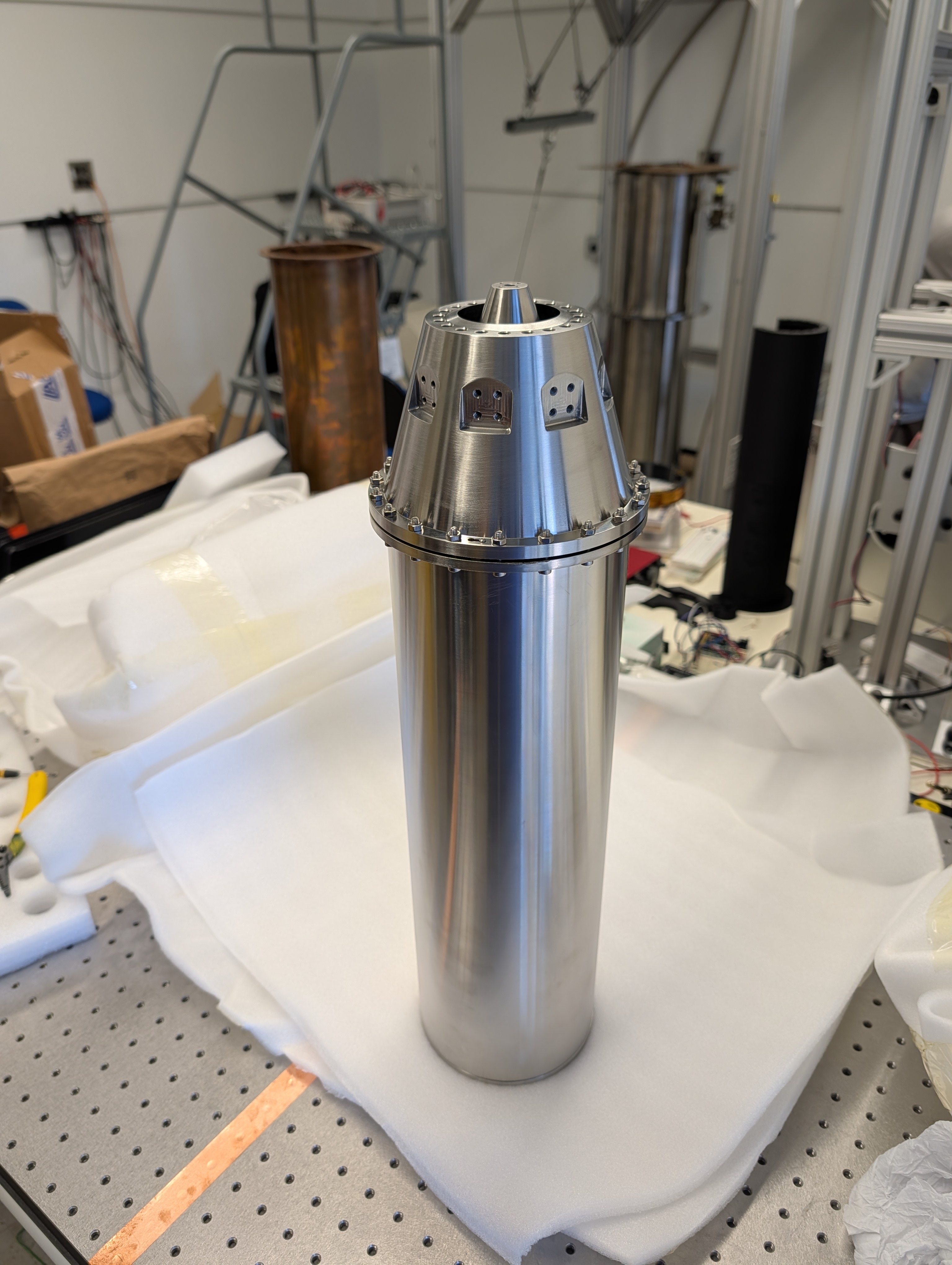
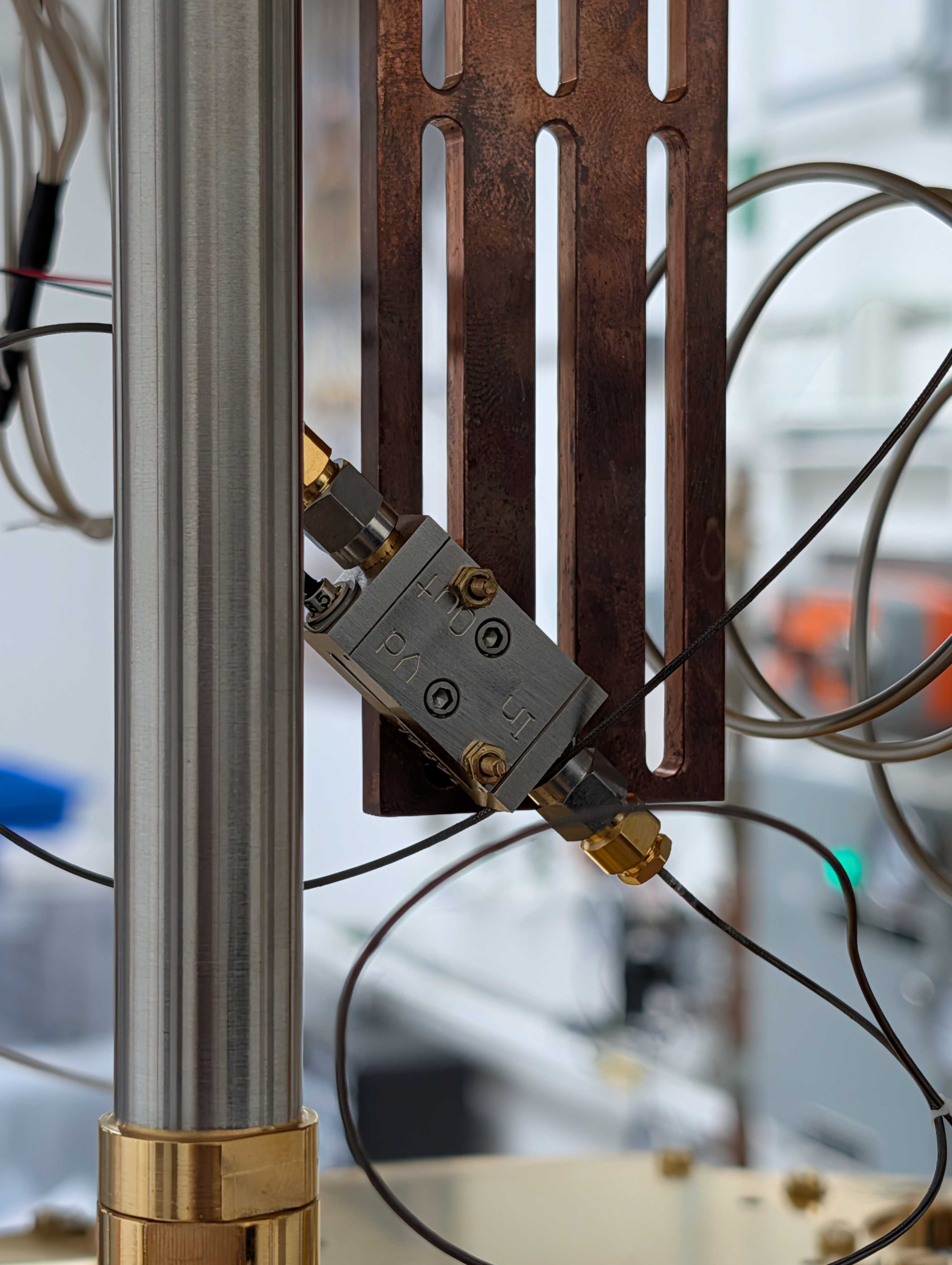
Explore the Experiment
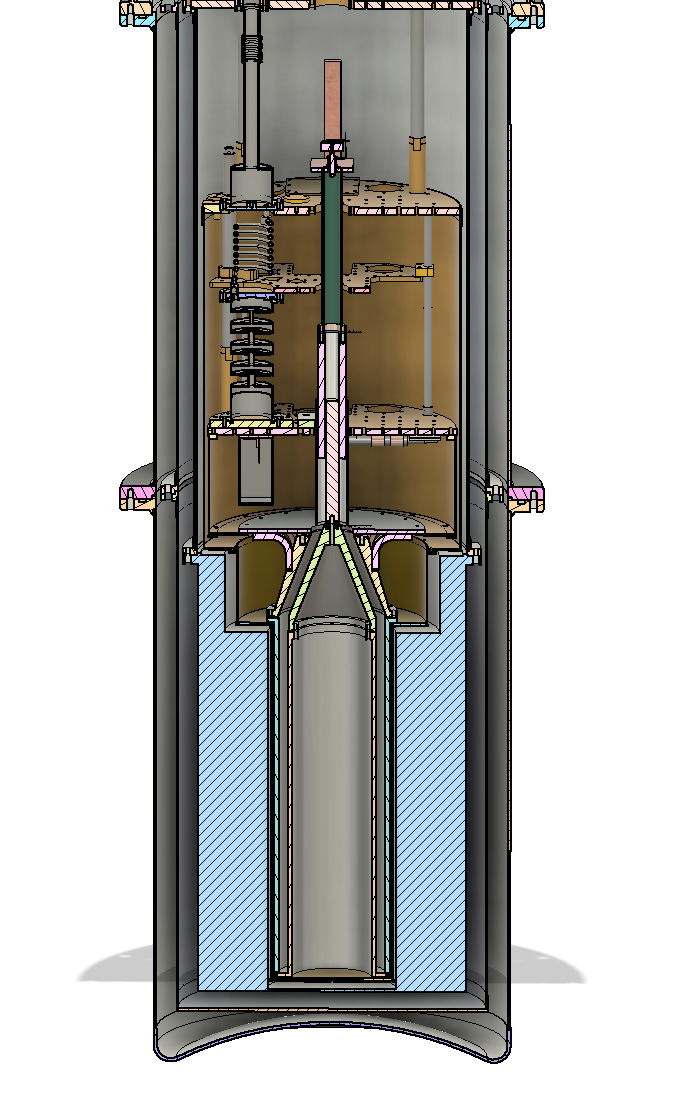
Click a + to learn about each component.
Sources
- V. Ankel et al., "Noise limits for dc SQUID readout of high-Q resonators below 300 MHz," J. Appl. Phys. 138, 094505 (2025) — 10.1063/5.0280831